
CUSTOM MILITARY-STYLE
DOG TAGS
Perfect for Cadets, veterans, first responders, families, events, reunions and gifts.
Sample Dog Tags
U.S. Public Health Service
Navy League Cadet
The Story Behind the Dog Tag
Civil War beginnings. Long before identification tags became standard equipment, American soldiers worried about being buried without a name. During the Civil War, some pinned identifying notes to their uniforms, marked their belongings or fashioned tags from wood and metal. Others purchased engraved identification discs from private vendors. These personal efforts revealed the need for a reliable military identification system.
From one tag to two. In December 1906, the U.S. Army formally required identification tags with the field uniform. Early tags were round aluminum discs stamped with the wearer’s name and unit information. In July 1916, the Army required a second tag: one could remain with the fallen service member while the other supported burial records. Other services adopted their own identification-tag requirements.
The familiar shape—and the notch. By World War II, tags had evolved into the rounded-rectangle shape widely recognized today. Information varied by service and period, but could include a name, service number, blood type and religious preference. The notch seen on many older tags served the equipment used to stamp or emboss them; it was not intended for the battlefield uses described in popular myths.
A tradition that continues. Tag designs and identification numbers have changed over time. In 2015, the Army began replacing Social Security numbers with Department of Defense identification numbers to better protect personal information. Despite advances in identification technology, the simple metal tag remains a practical piece of military equipment and an enduring reminder of the individual behind the uniform.
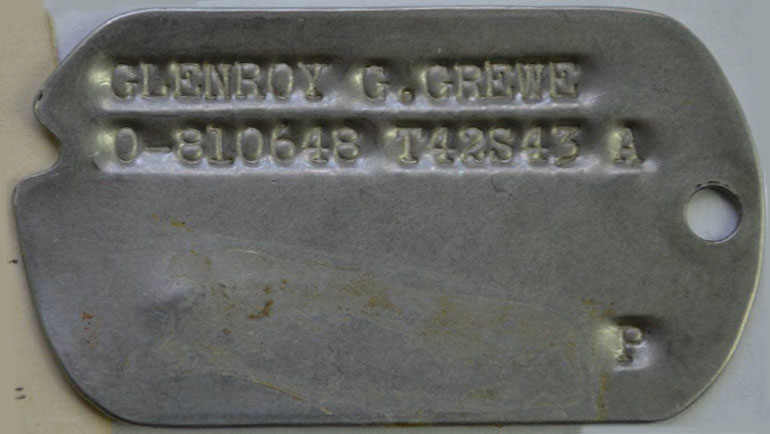
U.S. National Archives
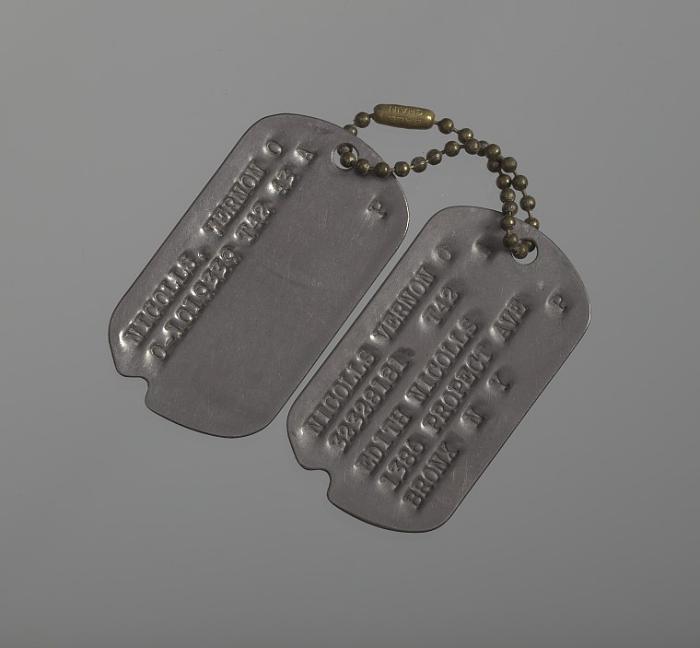
Smithsonian NMAAHC, Gift of Kay L. Nicolls
Review Your Order
Camp Liberty reviews personalization before production. Save your personalization and mailing details here, then complete secure checkout. No separate email is required. Production starts after successful payment and review.
Your Details & Secure Payment
US shipping only. Price includes shipping and handling; 10% tax is added at checkout. Fulfillment is within three days after successful payment and personalization approval; transit time is additional. All purchases are nonrefundable.